
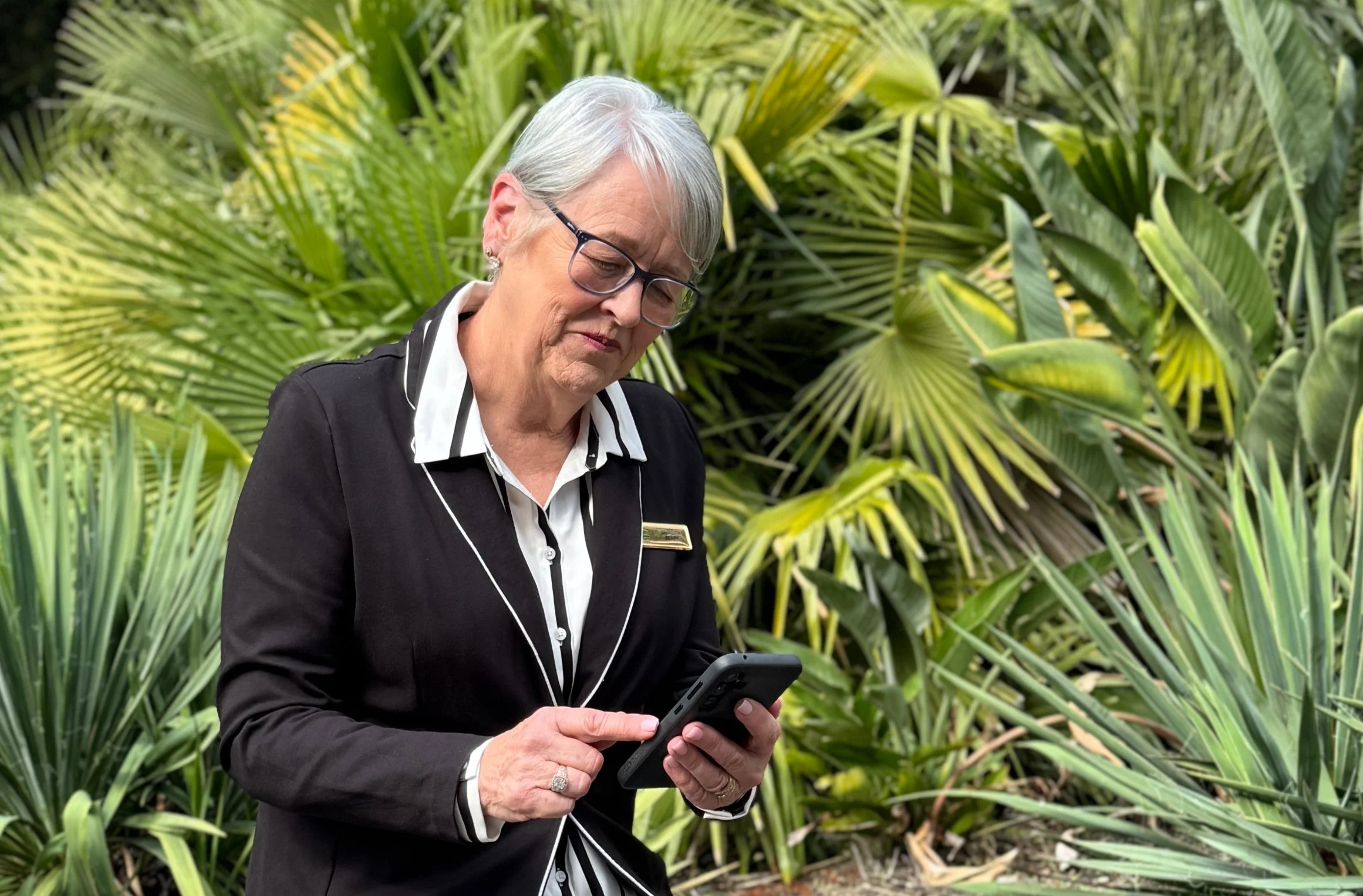
PUCV Chair Cr Moira Berry says the mobile networks in peri urban areas, built for rural populations, get overstretched when holiday makers double or triple the population during peak season.
Peri Urban Councils Victoria (PUCV) has urged the Federal Government to improve mobile phone service in holiday hot spots that will soon swell with hundreds of thousands of summer visitors.
PUCV Chair Cr Moira Berry said rapidly growing peri urban areas, including the coastal areas within Bass Coast and Surf Coast shires, were plagued with black and grey spots that undermined economic activity and compromised public safety.
“We are again approaching the summer holidays, which is a period of peak demand in peri urban communities,” Cr Berry said.
“Over December and January and on weekends, our population can double or triple. The local mobile network was built for a rural population, so it gets overstretched and demand outweighs capacity, creating telecommunications grey spots that impact everyone.
“Grey spots are not mapped in national datasets. You may be in a service area, but you get disconnected from the network - if you can connect at all.
“Reliable mobile coverage is essential, particularly during bushfire season. When networks fail, vital emergency information and alerts may not get through meaning people may not be able to stay informed or call for help,” she said.
Cr Berry said PUCV had provided a submission on the draft Universal Outdoor Mobile Obligation (UOMO) Bill to help rapidly growing peri urban municipalities to secure the service their communities needed and expected.
“The Bill, which was been tabled in parliament last week, provides an opportunity to ensure outdoor mobile connectivity is truly universal and accessible everywhere and anywhere,” Cr Berry said. “Universal access must be a functional reality, not a geographic promise.”
PUCV’s submission called for the UOMO legislation to include:
population-based capacity benchmarks that reflect seasonal visitation and tourism peaks;
a more broad definition of universal service that includes reliable mobile data, delivery of emergency alerts, and device interoperability between carriers;
recognition of telecommunications as essential infrastructure, critical to public safety and resilience; and
a mandated minimum of 48 hours of auxiliary backup power at all mobile sites.
PUCV representatives recently met with Infrastructure, Transport, Regional Development and Local Government Minister Catherine King and representatives of Communications Minister Anika Wells and Minister for Regional Development, Local Government and Territories Kristy McBain.
The delegation requested new rounds of existing funding programs designed to improve mobile service and connectivity and to address blackspots.
Cr Berry said the delegation also asked that peri urban communities be prioritised in the current round of the Telecommunications Disaster Resilience Innovation grant program.
“We have a combined population of around 300,000, which is expected to jump by 30 per cent over the coming decade,” Cr Berry said.
“Within our five member municipalities, there are nearly 300 recorded mobile blackspots in forest and bushland as well as along major commuter corridors and freight routes and at popular tourist sites,” Cr Berry said.
“Our telecommunications towers were built for a rural population and simply don’t have the capacity to service new residential subdivisions, leaving many unable to connect to the network.
“Now is the time for the government to invest in the telecommunications infrastructure we need now and that we will want in the future,” she said.